How Vastu Shastra Improves Positive Energy in Your Home

How Vastu Shastra Improves Positive Energy in Your Home

Have you ever walked into a home and instantly felt calm, comfortable, and relaxed? While many factors can create this feeling, Vastu Shastra believes that the way a home is designed and arranged also plays an important role. It is an ancient Indian practice that focuses on balancing the five natural elements and using directions wisely to create a peaceful living environment.

A home with good Vastu is believed to attract positive energy, improve relationships, support good health, and bring happiness and prosperity to the family. The good news is that following Vastu does not always require major renovations. Small changes, such as keeping the entrance clean, placing furniture in the right direction, allowing natural light inside, and keeping your home clutter-free, can make a noticeable difference.

Whether you are building a new house or simply want to make your current home feel more positive, understanding the basic principles of Vedic Energy Vastu can be helpful.

Understanding Positive Energy in Vastu

According to Vastu Shastra, positive energy is the flow of good and balanced energy in a home or workplace. It is believed that when this energy moves freely, it creates a peaceful and happy environment. This can help improve health, bring happiness, support success, and strengthen family relationships. If the energy is blocked or unbalanced, it may lead to stress, arguments,

confusion, or money-related problems.

Vastu Shastra is based on the balance of five natural elements—Earth, Water, Fire, Air, and Space. When these elements are balanced by placing rooms, furniture, doors, and other parts of the house in the right direction, positive energy is believed to flow more smoothly throughout the space.

Natural sunlight, fresh air, cleanliness, and a well-organized home also help create a positive atmosphere. A clean, bright, and clutter-free home feels more comfortable, peaceful, and welcoming. It can also help people feel relaxed and improve their mood. Many people follow Vastu because they believe it creates a balanced and positive living environment. It is thought to support better focus, family harmony, emotional well-being, and overall happiness. Even if you do not follow every Vastu rule, simple habits like keeping your home clean, letting in sunlight, and ensuring good ventilation can make your home feel fresh, comfortable, and positive.

How Vastu Shastra Improves Positive Energy

Vastu Shastra focuses on creating a balanced living space where positive energy can flow freely. It is based on the idea that the design, direction, and arrangement of a home can influence the well-being of the people living in it. By following simple Vastu principles, you can create a peaceful environment that supports good health, happiness, and success.

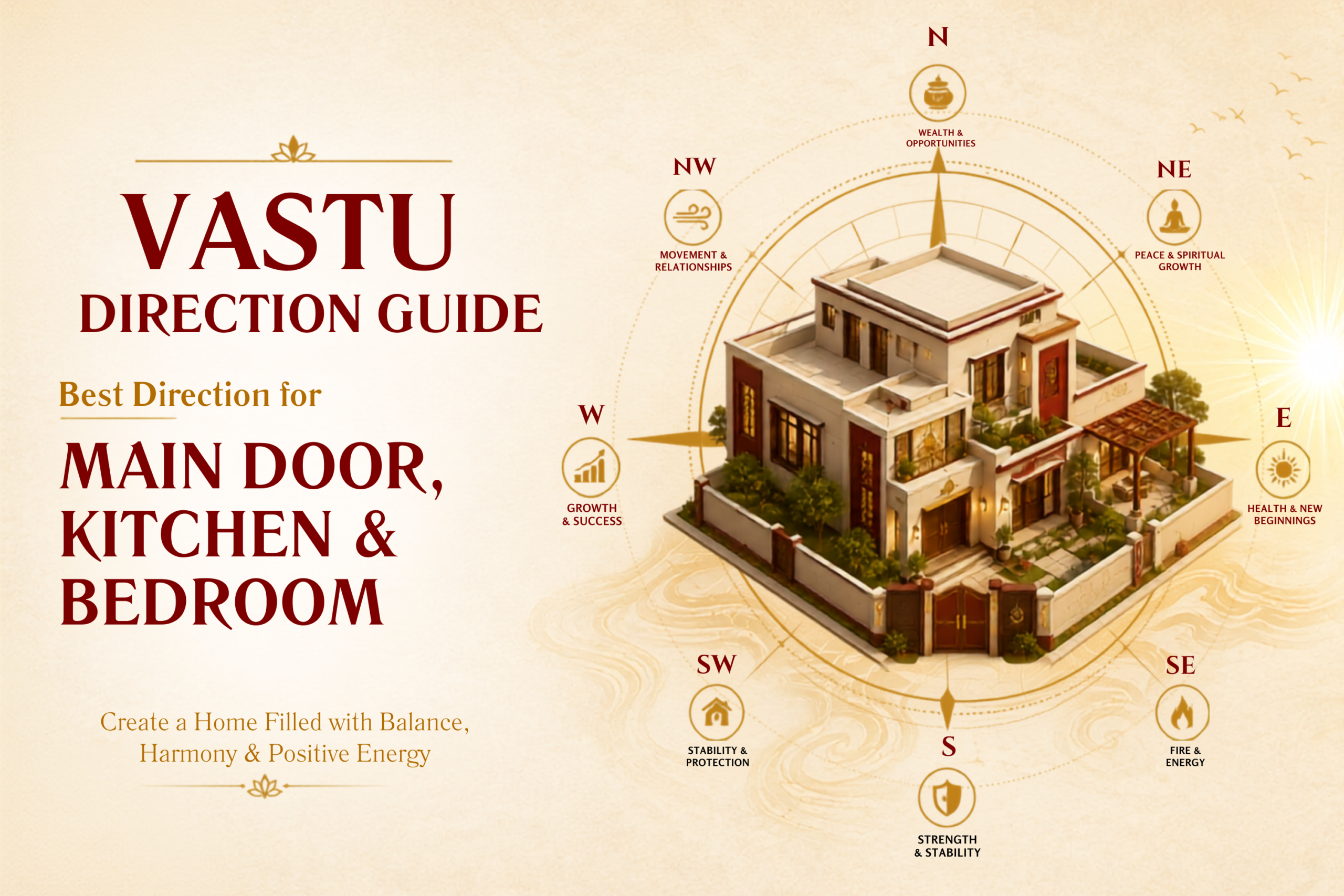
  • Proper Direction of the Main Entrance:The main entrance is where positive energy enters the home. Keeping it in the right direction, clean, bright, and free from obstacles helps create a welcoming and positive environment.
  • Importance of Natural Light and Ventilation: Natural light and fresh air keep the home healthy and full of positive energy. A bright, well-ventilated space feels fresh, comfortable, and peaceful.
  • Correct Placement of Rooms: Vastu suggests placing rooms in suitable directions based on their purpose. Proper room placement helps maintain balance, comfort, and harmony in the home.
  • Balanced Five Elements (Panchabhutas): Vastu Shastra focuses on balancing the five elements—Earth, Water, Fire, Air, and Space. A balanced home is believed to support peace, health, and overall well-being.
  • Decluttering and Clean Spaces: A clean and clutter-free home allows positive energy to flow easily. Regular cleaning and organizing create a calm, fresh, and relaxing living environment.

Importance of the Five Elements in Vastu

The foundation of Vastu Shastra is based on balancing the five natural elements.

  • Earth: Earth represents stability, strength, and security. Heavy furniture and storage areas are generally recommended in the southwest direction to create balance.
  • Water: Water symbolizes purity, peace, and prosperity. Water sources like underground tanks, fountains, or small water features are often considered suitable in the northeast direction.
  • Fire: Fire represents energy, health, and transformation. Kitchens are usually recommended in the southeast direction because this area is associated with the fire element.
  • Air: Air supports movement, communication, and fresh thinking. Proper ventilation and open windows help maintain healthy airflow throughout the house.
  • Space: Space allows energy to move freely. Keeping rooms open, clean, and free from unnecessary clutter is considered important in Vastu.
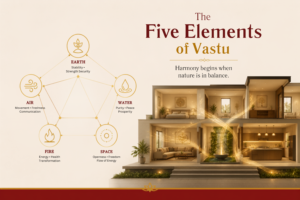
Five elements of vastu

Best Vastu Tips for Every Room

Every room in your home has a different purpose, and according to Vastu Shastra, its direction and arrangement can affect the flow of positive energy. Following simple Vastu tips for each room can help create a peaceful, comfortable, and balanced living environment.

Living Room Vastu: The living room is where family members spend time together and welcome guests. It should have a bright, open, and welcoming atmosphere.

Vastu Tips:

  • Choose the north, east, or northeast direction for the living room.
  • Keep the room clean, spacious, and free from unnecessary items.
  • Place heavy furniture in the south or west part of the room.
  • Allow plenty of natural light and fresh air to enter.
  • Decorate the room with indoor plants, peaceful artwork, or fresh flowers.

Bedroom Vastu: The bedroom is a place for rest and relaxation. Proper Vastu can help improve sleep quality and create a calm environment.

Vastu Tips:

  • The southwest direction is considered best for the master bedroom.
  • Sleep with your head towards the south or east.
  • Avoid placing a mirror directly in front of the bed.
  • Keep electronic devices to a minimum.
  • Use soft and calming colours for the walls and décor.

Kitchen Vastu: The kitchen represents health and nourishment. A well-planned kitchen is believed to support good health and positive energy.

Vastu Tips:

  • The southeast direction is ideal for the kitchen.
  • Place the cooking stove in the southeast corner.
  • Face east while cooking whenever possible.
  • Keep the kitchen clean and well-organised.
  • Store drinking water in the northeast part of the kitchen.

Bathroom and Toilet Vastu: Bathrooms should be designed to maintain cleanliness and prevent negative energy from affecting the rest of the home.

Vastu Tips:

  • The northwest or west direction is generally suitable for bathrooms.
  • Keep the bathroom clean, dry, and well-ventilated.
  • Fix leaking taps and pipes without delay.
  • Keep the toilet door closed when not in use.
  • Avoid sharing a wall between the bathroom and the pooja room if possible.

Pooja Room Vastu: The pooja room is the spiritual centre of the home. A peaceful and properly placed pooja room is believed to encourage positivity and inner peace.

Vastu Tips:

  • The northeast direction is the most suitable location for the pooja room.
  • Keep the area clean, quiet, and free from clutter.
  • Face east or north while praying.
  • Use natural light or soft lighting whenever possible.
  • Avoid placing the pooja room next to a bathroom or directly under a staircase.
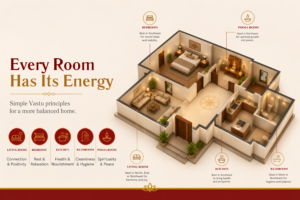
Every room has its energy

Best Colors for Positive Energy According to Vastu

According to Vastu Shastra, colors play an important role in creating a peaceful and positive atmosphere in your home. Different colors are believed to influence emotions, energy, and the overall mood of a space. Choosing the right colors for each room can help create a balanced and welcoming environment.

  • White: White represents purity, peace, and positivity. It makes a room feel bright, clean, and spacious. It is a great choice for bedrooms, living rooms, and pooja rooms.
  • Light Yellow: Light yellow is associated with happiness, warmth, and wisdom. It brings cheerful energy into the home and is ideal for study rooms, living rooms, and dining areas.
  • Green: Green symbolizes nature, growth, and good health. It creates a calming effect and helps reduce stress. This color works well in bedrooms, balconies, and study rooms.
  • Light Blue: Light blue promotes peace, relaxation, and clear thinking. It creates a soothing atmosphere and is a good option for bedrooms, meditation spaces, and bathrooms.
  • Pink: Soft pink represents love, kindness, and harmony. It creates a warm and comforting environment, making it suitable for bedrooms and children’s rooms.
  • Beige and Cream: Neutral shades like beige and cream bring balance and stability to a home. They make spaces feel calm, elegant, and welcoming while allowing natural light to brighten the room.
  • Colors to Avoid: According to Vastu, very dark shades like black, dark grey, and deep red should be used carefully, especially in bedrooms and pooja rooms. These colors may create a heavy atmosphere if overused. If you like darker shades, use them as accents instead of painting entire walls.

Indoor Plants That Attract Positive Energy

According to Vastu Shastra, indoor plants help attract positive energy, improve air quality, reduce stress, and create a peaceful, healthy, and harmonious home.

1. Tulsi (Holy Basil): Tulsi is one of the most sacred plants in India and is known for attracting positive energy. It is believed to remove negative vibrations and bring peace and prosperity. Place it in the north, northeast, or east direction and make sure it receives enough sunlight.

2. Bamboo Plant: The lucky bamboo plant is considered a symbol of good fortune, growth, and success. It is believed to attract wealth and positive energy when placed in the east or southeast corner of the home.

3. Money Plant: Money plants are popular in Vastu because they are associated with financial growth and good luck. Keep the plant in the southeast direction to attract prosperity and avoid placing it in the northeast.

4. Peace Lily: Peace lilies are known for their beautiful white flowers and air-purifying qualities. They help create a peaceful environment and are believed to reduce negative energy while promoting harmony in the home.

5. Aloe Vera: Aloe vera is a useful medicinal plant that also attracts positive energy. It is believed to absorb negative vibrations and improve the overall atmosphere of the house. Place it in a bright area with indirect sunlight.

6. Snake Plant:The snake plant is easy to maintain and helps improve indoor air quality. According to Vastu, it can bring protective energy and create a balanced environment when placed in the right location.

7. Jasmine Plant: Jasmine is known for its pleasant fragrance and calming effect. It is believed to attract love, happiness, and positive energy while creating a relaxing atmosphere in the home.

Tips for Placing Indoor Plants

  • Keep plants healthy and well-watered.
  • Remove dry or dead leaves regularly.
  • Place plants where they receive enough natural light.
  • Avoid keeping thorny plants like cactus inside the house if following Vastu principles.
  • Choose fresh, green plants that promote a peaceful and welcoming environment.

Common Habits That May Block Positive Energy

Some everyday habits are believed to reduce positive energy in a home, including:

  • Keeping broken furniture for long periods.
  • Allowing excessive clutter to build up.
  • Ignoring cleanliness around the entrance.
  • Blocking windows that provide natural light.
  • Poor ventilation in living spaces.
  • Leaving damaged electrical fittings or leaking pipes unrepaired.

Regular maintenance helps keep the home clean, safe, and pleasant to live in.
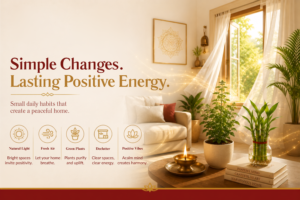
Simple Change lasting Positive Energy

Vastu Myths vs. Facts

Myth

Fact

Myth 1: Vastu guarantees instant success and wealth.

Fact: Vastu helps create a balanced and positive environment, but success also depends on hard work, planning, and personal efforts.

Myth 2: Every Vastu defect requires expensive renovations.

Fact: Many Vastu issues can be improved with simple changes like rearranging furniture, improving lighting, or keeping spaces clutter-free.

Myth 3: Vastu is only for newly built homes.

Fact: Vastu principles can also be applied to existing homes and offices without major structural changes.

Myth 4: Following Vastu is compulsory for everyone.

Fact: Vastu is a traditional guideline that people may choose to follow based on their personal beliefs and preferences.

Myth 5: Every home with a Vastu defect brings bad luck.

Fact: A single Vastu imbalance does not automatically cause problems. Overall cleanliness, proper ventilation, and a positive lifestyle also play an important role.

Conclusion

A home should be a place where you feel comfortable, peaceful, and happy every day. Whether you believe in Vastu Shastra or simply appreciate its practical approach to creating an organized and balanced living space, its principles can inspire positive lifestyle changes. Instead of aiming for perfection, focus on creating an environment that supports your well-being and brings

comfort to your family. After all, a positive home is built not only through its design but also through the care, love, and positive mindset of the people who live in it.

Frequently Asked Questions (FAQs)

Can Vastu really improve positive energy?

According to Vastu Shastra, a home designed with the right directions, balanced elements, and clutter-free spaces helps create a peaceful and positive environment. While it is a traditional belief, many people find that following Vastu principles improves comfort, harmony, and overall well-being.

Which direction is best for the main entrance?

The north, east, and northeast directions are generally considered the most favorable for the main entrance. These directions are believed to allow positive energy, natural light, and fresh air to enter the home.

How can I remove negative energy from my home?

You can reduce negative energy by keeping your home clean and organized, allowing natural light and fresh air inside, fixing broken items, using calming colors, placing indoor plants, and maintaining a peaceful atmosphere.

Are Vastu remedies effective without renovation?

Yes. Many Vastu remedies do not require major structural changes. Simple steps like rearranging furniture, improving lighting, decluttering rooms, using mirrors correctly, and adding Vastu-friendly plants or décor can help create a more balanced living space.

Which plants are considered lucky according to Vastu?

Some of the most popular Vastu-friendly plants include the Tulsi (Holy Basil) plant, Money Plant, Lucky Bamboo, Peace Lily, and Jade Plant. These plants are believed to attract positivity, prosperity, and good health when placed in suitable locations.
Table of Contents

Recent Posts

How Vastu Shastra Improves Positive Energy in Your Home

How Vastu Shastra Improves Positive Energy in Your Home

Have you ever walked into a home and instantly felt calm, comfortable, and relaxed? While many factors can create this feeling, Vastu Shastra believes that the way a home is designed and arranged also plays an important role. It is an ancient Indian practice that focuses on balancing the five natural elements and using directions wisely to create a peaceful living environment.

A home with good Vastu is believed to attract positive energy, improve relationships, support good health, and bring happiness and prosperity to the family. The good news is that following Vastu does not always require major renovations. Small changes, such as keeping the entrance clean, placing furniture in the right direction, allowing natural light inside, and keeping your home clutter-free, can make a noticeable difference.

Whether you are building a new house or simply want to make your current home feel more positive, understanding the basic principles of Vedic Energy Vastu can be helpful.

Understanding Positive Energy in Vastu

According to Vastu Shastra, positive energy is the flow of good and balanced energy in a home or workplace. It is believed that when this energy moves freely, it creates a peaceful and happy environment. This can help improve health, bring happiness, support success, and strengthen family relationships. If the energy is blocked or unbalanced, it may lead to stress, arguments,

confusion, or money-related problems.

Vastu Shastra is based on the balance of five natural elements—Earth, Water, Fire, Air, and Space. When these elements are balanced by placing rooms, furniture, doors, and other parts of the house in the right direction, positive energy is believed to flow more smoothly throughout the space.

Natural sunlight, fresh air, cleanliness, and a well-organized home also help create a positive atmosphere. A clean, bright, and clutter-free home feels more comfortable, peaceful, and welcoming. It can also help people feel relaxed and improve their mood. Many people follow Vastu because they believe it creates a balanced and positive living environment. It is thought to support better focus, family harmony, emotional well-being, and overall happiness. Even if you do not follow every Vastu rule, simple habits like keeping your home clean, letting in sunlight, and ensuring good ventilation can make your home feel fresh, comfortable, and positive.

How Vastu Shastra Improves Positive Energy

Vastu Shastra focuses on creating a balanced living space where positive energy can flow freely. It is based on the idea that the design, direction, and arrangement of a home can influence the well-being of the people living in it. By following simple Vastu principles, you can create a peaceful environment that supports good health, happiness, and success.

  • Proper Direction of the Main Entrance:The main entrance is where positive energy enters the home. Keeping it in the right direction, clean, bright, and free from obstacles helps create a welcoming and positive environment.
  • Importance of Natural Light and Ventilation: Natural light and fresh air keep the home healthy and full of positive energy. A bright, well-ventilated space feels fresh, comfortable, and peaceful.
  • Correct Placement of Rooms: Vastu suggests placing rooms in suitable directions based on their purpose. Proper room placement helps maintain balance, comfort, and harmony in the home.
  • Balanced Five Elements (Panchabhutas): Vastu Shastra focuses on balancing the five elements—Earth, Water, Fire, Air, and Space. A balanced home is believed to support peace, health, and overall well-being.
  • Decluttering and Clean Spaces: A clean and clutter-free home allows positive energy to flow easily. Regular cleaning and organizing create a calm, fresh, and relaxing living environment.

Importance of the Five Elements in Vastu

The foundation of Vastu Shastra is based on balancing the five natural elements.

  • Earth: Earth represents stability, strength, and security. Heavy furniture and storage areas are generally recommended in the southwest direction to create balance.
  • Water: Water symbolizes purity, peace, and prosperity. Water sources like underground tanks, fountains, or small water features are often considered suitable in the northeast direction.
  • Fire: Fire represents energy, health, and transformation. Kitchens are usually recommended in the southeast direction because this area is associated with the fire element.
  • Air: Air supports movement, communication, and fresh thinking. Proper ventilation and open windows help maintain healthy airflow throughout the house.
  • Space: Space allows energy to move freely. Keeping rooms open, clean, and free from unnecessary clutter is considered important in Vastu.

Five elements of vastu

Best Vastu Tips for Every Room

Every room in your home has a different purpose, and according to Vastu Shastra, its direction and arrangement can affect the flow of positive energy. Following simple Vastu tips for each room can help create a peaceful, comfortable, and balanced living environment.

Living Room Vastu: The living room is where family members spend time together and welcome guests. It should have a bright, open, and welcoming atmosphere.

Vastu Tips:

  • Choose the north, east, or northeast direction for the living room.
  • Keep the room clean, spacious, and free from unnecessary items.
  • Place heavy furniture in the south or west part of the room.
  • Allow plenty of natural light and fresh air to enter.
  • Decorate the room with indoor plants, peaceful artwork, or fresh flowers.

Bedroom Vastu: The bedroom is a place for rest and relaxation. Proper Vastu can help improve sleep quality and create a calm environment.

Vastu Tips:

  • The southwest direction is considered best for the master bedroom.
  • Sleep with your head towards the south or east.
  • Avoid placing a mirror directly in front of the bed.
  • Keep electronic devices to a minimum.
  • Use soft and calming colours for the walls and décor.

Kitchen Vastu: The kitchen represents health and nourishment. A well-planned kitchen is believed to support good health and positive energy.

Vastu Tips:

  • The southeast direction is ideal for the kitchen.
  • Place the cooking stove in the southeast corner.
  • Face east while cooking whenever possible.
  • Keep the kitchen clean and well-organised.
  • Store drinking water in the northeast part of the kitchen.

Bathroom and Toilet Vastu: Bathrooms should be designed to maintain cleanliness and prevent negative energy from affecting the rest of the home.

Vastu Tips:

  • The northwest or west direction is generally suitable for bathrooms.
  • Keep the bathroom clean, dry, and well-ventilated.
  • Fix leaking taps and pipes without delay.
  • Keep the toilet door closed when not in use.
  • Avoid sharing a wall between the bathroom and the pooja room if possible.

Pooja Room Vastu: The pooja room is the spiritual centre of the home. A peaceful and properly placed pooja room is believed to encourage positivity and inner peace.

Vastu Tips:

  • The northeast direction is the most suitable location for the pooja room.
  • Keep the area clean, quiet, and free from clutter.
  • Face east or north while praying.
  • Use natural light or soft lighting whenever possible.
  • Avoid placing the pooja room next to a bathroom or directly under a staircase.

Every room has its energy

Best Colors for Positive Energy According to Vastu

According to Vastu Shastra, colors play an important role in creating a peaceful and positive atmosphere in your home. Different colors are believed to influence emotions, energy, and the overall mood of a space. Choosing the right colors for each room can help create a balanced and welcoming environment.

  • White: White represents purity, peace, and positivity. It makes a room feel bright, clean, and spacious. It is a great choice for bedrooms, living rooms, and pooja rooms.
  • Light Yellow: Light yellow is associated with happiness, warmth, and wisdom. It brings cheerful energy into the home and is ideal for study rooms, living rooms, and dining areas.
  • Green: Green symbolizes nature, growth, and good health. It creates a calming effect and helps reduce stress. This color works well in bedrooms, balconies, and study rooms.
  • Light Blue: Light blue promotes peace, relaxation, and clear thinking. It creates a soothing atmosphere and is a good option for bedrooms, meditation spaces, and bathrooms.
  • Pink: Soft pink represents love, kindness, and harmony. It creates a warm and comforting environment, making it suitable for bedrooms and children’s rooms.
  • Beige and Cream: Neutral shades like beige and cream bring balance and stability to a home. They make spaces feel calm, elegant, and welcoming while allowing natural light to brighten the room.
  • Colors to Avoid: According to Vastu, very dark shades like black, dark grey, and deep red should be used carefully, especially in bedrooms and pooja rooms. These colors may create a heavy atmosphere if overused. If you like darker shades, use them as accents instead of painting entire walls.

Indoor Plants That Attract Positive Energy

According to Vastu Shastra, indoor plants help attract positive energy, improve air quality, reduce stress, and create a peaceful, healthy, and harmonious home.

1. Tulsi (Holy Basil): Tulsi is one of the most sacred plants in India and is known for attracting positive energy. It is believed to remove negative vibrations and bring peace and prosperity. Place it in the north, northeast, or east direction and make sure it receives enough sunlight.

2. Bamboo Plant: The lucky bamboo plant is considered a symbol of good fortune, growth, and success. It is believed to attract wealth and positive energy when placed in the east or southeast corner of the home.

3. Money Plant: Money plants are popular in Vastu because they are associated with financial growth and good luck. Keep the plant in the southeast direction to attract prosperity and avoid placing it in the northeast.

4. Peace Lily: Peace lilies are known for their beautiful white flowers and air-purifying qualities. They help create a peaceful environment and are believed to reduce negative energy while promoting harmony in the home.

5. Aloe Vera: Aloe vera is a useful medicinal plant that also attracts positive energy. It is believed to absorb negative vibrations and improve the overall atmosphere of the house. Place it in a bright area with indirect sunlight.

6. Snake Plant:The snake plant is easy to maintain and helps improve indoor air quality. According to Vastu, it can bring protective energy and create a balanced environment when placed in the right location.

7. Jasmine Plant: Jasmine is known for its pleasant fragrance and calming effect. It is believed to attract love, happiness, and positive energy while creating a relaxing atmosphere in the home.

Tips for Placing Indoor Plants

  • Keep plants healthy and well-watered.
  • Remove dry or dead leaves regularly.
  • Place plants where they receive enough natural light.
  • Avoid keeping thorny plants like cactus inside the house if following Vastu principles.
  • Choose fresh, green plants that promote a peaceful and welcoming environment.

Common Habits That May Block Positive Energy

Some everyday habits are believed to reduce positive energy in a home, including:

  • Keeping broken furniture for long periods.
  • Allowing excessive clutter to build up.
  • Ignoring cleanliness around the entrance.
  • Blocking windows that provide natural light.
  • Poor ventilation in living spaces.
  • Leaving damaged electrical fittings or leaking pipes unrepaired.

Regular maintenance helps keep the home clean, safe, and pleasant to live in.

Simple Change lasting Positive Energy

Vastu Myths vs. Facts

Myth

Fact

Myth 1: Vastu guarantees instant success and wealth.

Fact: Vastu helps create a balanced and positive environment, but success also depends on hard work, planning, and personal efforts.

Myth 2: Every Vastu defect requires expensive renovations.

Fact: Many Vastu issues can be improved with simple changes like rearranging furniture, improving lighting, or keeping spaces clutter-free.

Myth 3: Vastu is only for newly built homes.

Fact: Vastu principles can also be applied to existing homes and offices without major structural changes.

Myth 4: Following Vastu is compulsory for everyone.

Fact: Vastu is a traditional guideline that people may choose to follow based on their personal beliefs and preferences.

Myth 5: Every home with a Vastu defect brings bad luck.

Fact: A single Vastu imbalance does not automatically cause problems. Overall cleanliness, proper ventilation, and a positive lifestyle also play an important role.

Conclusion

A home should be a place where you feel comfortable, peaceful, and happy every day. Whether you believe in Vastu Shastra or simply appreciate its practical approach to creating an organized and balanced living space, its principles can inspire positive lifestyle changes. Instead of aiming for perfection, focus on creating an environment that supports your well-being and brings

comfort to your family. After all, a positive home is built not only through its design but also through the care, love, and positive mindset of the people who live in it.

Frequently Asked Questions (FAQs)

Can Vastu really improve positive energy?

According to Vastu Shastra, a home designed with the right directions, balanced elements, and clutter-free spaces helps create a peaceful and positive environment. While it is a traditional belief, many people find that following Vastu principles improves comfort, harmony, and overall well-being.

Which direction is best for the main entrance?

The north, east, and northeast directions are generally considered the most favorable for the main entrance. These directions are believed to allow positive energy, natural light, and fresh air to enter the home.

How can I remove negative energy from my home?

You can reduce negative energy by keeping your home clean and organized, allowing natural light and fresh air inside, fixing broken items, using calming colors, placing indoor plants, and maintaining a peaceful atmosphere.

Are Vastu remedies effective without renovation?

Yes. Many Vastu remedies do not require major structural changes. Simple steps like rearranging furniture, improving lighting, decluttering rooms, using mirrors correctly, and adding Vastu-friendly plants or décor can help create a more balanced living space.

Which plants are considered lucky according to Vastu?

Some of the most popular Vastu-friendly plants include the Tulsi (Holy Basil) plant, Money Plant, Lucky Bamboo, Peace Lily, and Jade Plant. These plants are believed to attract positivity, prosperity, and good health when placed in suitable locations.
Leave a Comment

Your email address will not be published. Required fields are marked *

Recent Posts